Authored by: Bryan Lachapelle, President & CEO
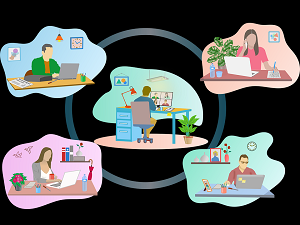 The workplace has changed, and it is not going back. Employees now check in from homes, job trailers, hotels, and coffee shops. These “third places” offer convenience, but they also bring new security concerns that many companies have not fully addressed.
In Niagara’s construction and manufacturing sector, where every hour of uptime matters and downtime means lost revenue, remote work must be built on a foundation of strong IT policies and practical awareness.
Third Places Come with First-Class Risks
When employees work outside the office - especially from public locations - they often connect through open Wifi. These networks might feel harmless, but they are often the digital equivalent of leaving expensive tools unattended on a busy sidewalk.
Hackers target these environments because they are easy to exploit. Data, passwords, emails - all of it can be compromised if proper protections are not in place.
Public Wifi: The Hacker’s Hunting Ground
Open networks at coffee shops, libraries, and airports typically lack the encryption or oversight of a secure business network. Even networks with shared passwords offer little resistance to determined cybercriminals.
One common tactic is the “man-in-the-middle” attack, where hackers set up fake Wifi networks named things like “Free Café Wifi.” Once someone connects, every keystroke and email is visible to the attacker.
For companies, this means one unsecured laptop could put the entire operation at risk.
VPNs: Non-Negotiable for Remote Access
A Virtual Private Network, or VPN, encrypts all internet traffic, keeping company data safe even on unsecured networks. It is one of the most effective tools to protect remote workers.
Businesses should provide user-friendly VPN software and ensure it is configured to connect automatically. It is also smart to implement controls that block access to company systems unless the VPN is active.
This one step can turn a risky remote connection into a secure one.
Visual Hacking: The Low-Tech Threat That Still Works
Digital risks are not the only concern. In public spaces, someone sitting nearby can simply glance at a screen and capture confidential information.
This is known as “visual hacking,” and it happens more often than people realize. Financial data, customer lists, and product designs can be exposed in seconds.
Privacy screens - filters that darken the screen from side angles - should be standard issue for anyone working outside the office. Some devices also include built-in settings to protect on-screen content from side views.
Physical Security: Guard the Gear
Public environments require constant awareness. Leaving a laptop unattended for even a minute can lead to theft - and with it, the loss of sensitive data.
Employees should keep devices within reach at all times and use cable locks in shared workspaces. These locks will not stop every thief, but they do act as a deterrent.
Remote work policies should treat physical device safety with the same importance as cybersecurity.
Conversations Can Be Overheard
Sensitive phone calls in public places pose a different type of risk. While headphones protect what the employee hears, their own words can still be overheard by anyone nearby.
Private business discussions should not happen in public settings. If a call is necessary, it is best taken in a private space or at least away from crowds.
Clear Policies Support Consistent Action
A strong remote work policy eliminates guesswork. Every rule - from VPN use to device handling - should be clearly written, accessible, and explained in plain language.
Policies should be reviewed regularly to keep up with evolving threats. Training and reminders help reinforce good habits across the team.
Secure Remote Work Is Smart Business
Working from third places may be convenient, but without the right protections, it puts business operations at risk.
A strong remote access strategy is not a luxury - it is a necessity. With the right tools, clear expectations, and smart oversight, remote work becomes a competitive advantage rather than a liability.
Need help securing your remote team?
Niagara’s construction and manufacturing businesses deserve IT support that understands their world. From VPN setup to full remote access policies, local MSPs are helping companies lock down their data without slowing down the work.
Contact B4 Networks today to secure your systems, protect your people, and keep your projects on track - no matter where your team signs in.