Authored by: Bryan Lachapelle, President & CEO
 Most small businesses do care about cybersecurity. The issue usually is not effort. The issue is how security was built.
Security tools often get added over time to solve immediate problems. A new threat appears. A client requires something. A compliance checklist needs to be completed. Over time, more tools get added. On paper, this can look like strong protection.
In reality, it often turns into a patchwork of products that do not fully work together. Some areas overlap while others get overlooked. When security is not intentionally designed as a system, the problems rarely show up during everyday support tickets. They show up when something slips through and turns into a costly disruption.
Security in 2026 cannot rely on a single control that is mostly enabled. Attackers no longer approach through obvious entry points like the firewall. They simply look for whichever gap is easiest at that moment. The threat landscape is also evolving quickly.
According to the World Economic Forum’s Global Cybersecurity Outlook 2026, AI is expected to be the most significant driver of change in cybersecurity, according to 94 percent of respondents. That change is already visible. Phishing messages are becoming more convincing. Automated attacks are becoming cheaper to run. Large scale campaigns are becoming more targeted. A security strategy that depends on one or two tools catching everything is essentially relying on luck.
Industry reports on managed service providers also show another shift. Organizations are moving toward actively enforced security baselines rather than simple compliance checklists. Regular cyber risk assessments are becoming essential for identifying gaps before attackers find them. One helpful way to keep security organized is to think about outcomes instead of tools.
Security gaps become much easier to see when the focus shifts away from products and toward outcomes. The NIST Cybersecurity Framework 2.0 offers a helpful way to think about this. It organizes cybersecurity into six core areas.
Govern
Who owns security decisions? What standards are required? What counts as an exception?
Identify
Is there a clear picture of what systems and data need protection?
Protect
What controls are in place to reduce the chance of compromise?
Detect
How quickly can unusual activity be spotted?
Respond
What happens after something suspicious is discovered?
Recover
How are systems restored and validated after an incident?
Most small business environments focus heavily on Protect. Many are reasonably strong in Identify as well. The biggest gaps often appear in Govern, Detect, Respond, and Recover. Improving the following areas can make a security program much more consistent and resilient.
Phishing Resistant Authentication
Multi factor authentication is a good starting point, but it should not be treated as the finish line. Many environments still allow sign in methods that attackers can trick through phishing. In other cases, authentication rules are applied inconsistently.
Ways to strengthen this layer
- Require strong authentication for all accounts that access sensitive systems
- Remove outdated sign in methods and easy bypass options
- Use risk based rules to trigger additional verification during unusual login attempts
Device Trust and Usage Policies
Many organizations manage devices, but fewer clearly define what qualifies as a trusted device. Even fewer define what happens when a device falls out of compliance.
Ways to strengthen this layer
- Set a clear security baseline for all devices
- Establish written policies for bring your own device usage
- Limit or block access when devices no longer meet security requirements
Email and User Risk Controls
Email remains one of the most common entry points for cyberattacks. Training employees to spot phishing messages is helpful, but relying only on training assumes perfect attention every time.
Built in safeguards are essential.
Ways to strengthen this layer
- Filter suspicious links and attachments
- Block impersonation attempts and lookalike domains
- Clearly label messages from external senders
- Make it easy for employees to report suspicious emails
Continuous Vulnerability and Patch Coverage
Many organizations say patching is managed. In practice, that often means patches are attempted but not always verified. The real security layer is visibility. Systems need clear insight into what is missing, what failed, and which devices have exceptions.
Ways to strengthen this layer
- Set patch timelines based on vulnerability severity
- Include third party applications, drivers, and firmware
- Track exceptions so temporary gaps do not quietly become permanent
Detection and Response Readiness
Most environments generate security alerts. The problem is not the alerts themselves. The problem is knowing exactly what to do when one appears. Without clear procedures, important warnings can get lost in the noise.
Ways to strengthen this layer
- Establish a clear monitoring baseline
- Define which alerts require immediate action
- Create simple response playbooks for common incidents
- Regularly test recovery processes in realistic scenarios
Strengthening these five layers can transform security from a loose collection of tools into a consistent baseline. Phishing resistant authentication, device trust, email risk controls, patch visibility, and real detection and response processes create a foundation that is easier to manage and easier to trust.
A practical starting point is the weakest layer in the environment. Strengthen that area first. Confirm that it works consistently. Then move to the next layer. Over time, this approach builds a security program that is structured, measurable, and far less dependent on luck.
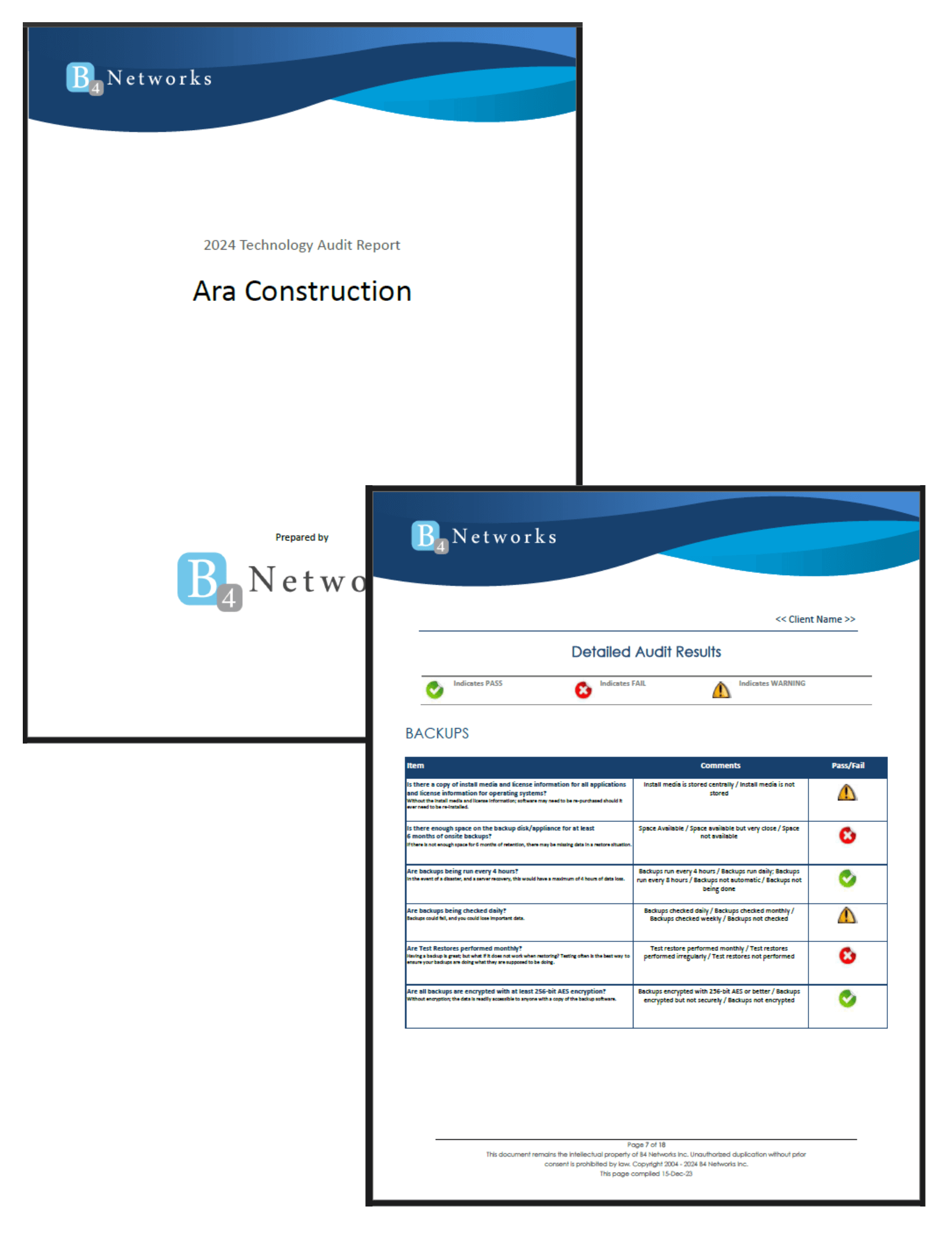
Want to know where the gaps might be in your current security setup? A quick cybersecurity assessment can reveal which layers are strong and which ones need attention before attackers find them. Reach out today to schedule a security review and get a clearer picture of your environment.