
Authored by: Bryan Lachapelle, President & CEO
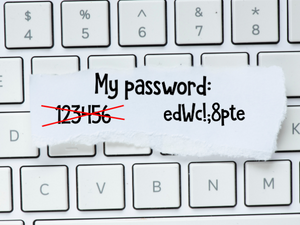 Picture walking up to a building and finding the key sitting under the doormat. Convenient. Predictable. Easy to find. That’s how most businesses are still handling passwords.
At B4 Networks, we see this every day working with organizations across the Niagara Region and Simcoe County. This is not because people don’t care about security, but because systems haven’t kept up with how people actually work.
The reuse problem
Most security issues don’t start inside your business. They start somewhere else. An online store, a food delivery app, or a service someone signed up for years ago gets breached, and suddenly your email and password are part of a database being sold online.
From there, attackers don’t guess. They automate. They take that same login and try it everywhere, from email and Microsoft 365 to banking and business applications. One reused password doesn’t open one door. It opens all of them. This is called credential stuffing, and it is one of the most common ways businesses across Ontario are being compromised today. A recent study found that 94% of passwords are reused across multiple accounts. That is not a rare mistake. It is the norm.
The illusion of ‘strong enough’
Most people think they are doing the right thing. Add a capital letter, include a number, maybe a symbol. That used to work. It doesn't anymore. Modern tools can test billions of password combinations per second. What feels “secure” to a person is often cracked in seconds by a machine.
Longer passwords help, but they still miss the bigger issue. A strong password is still a single point of failure. One phishing email, one reused login, or one compromised site is all it takes. After that, the password is no longer yours.
The businesses staying protected, whether in Niagara’s growing SMB community or larger teams across the GTHA and Simcoe County, are not relying on better memory. They are using better systems. A password manager:
- Generates long, random passwords
- Stores them securely
- Removes the need for employees to remember anything
That means no reuse, no sticky notes, no shortcuts. Every system has its own key.
The deadbolt layer
If your password is the lock, multi-factor authentication (MFA) is the deadbolt. It adds a second layer by requiring something you know, like your password, and something you have, like your phone or an authentication app. Even if a password is compromised, access is still blocked. This is one of the simplest and most effective protections businesses across Southern Ontario can put in place.
Whether you are managing resident data in a long-term care home in Niagara or Hamilton, handling vendor payments in an agriculture operation in Haldimand, or running a growing business anywhere across the GTA, your systems are only as secure as your access points. And most attacks today do not break in. They log in.
Security does not fail because people make mistakes. It fails when systems assume they will not. People will reuse passwords. They will click links. They will move quick. That is normal. And it is exactly what we see across businesses throughout Niagara and the surrounding region. The goal is not perfection. It is protection that works anyway.
We work with businesses across the Niagara Region and Simcoe County to:
- Eliminate password reuse risk
- Implement MFA across critical systems
- Set up password managers properly
- Build security into everyday workflows without slowing teams down
Because good security should not rely on people remembering more. It should rely on systems doing more.
If you are not sure where your business stands, we can walk through it with you. A quick, no-pressure conversation to look at where password risks typically show up, what is already working, and where there may be gaps.
Book a discovery call or call (Niagara) 905-228-4809, or (Barrie) 705-885-0993. No pressure. No jargon. Just clear answers.