Authored by: Bryan Lachapelle, President & CEO
 Most business owners believe they're prepared for an outage. They have backups, security software is installed, monitoring is in place. Everything appears to be covered. But when a server fails, ransomware strikes, or critical systems go offline, many businesses discover they were relying on assumptions instead of a recovery plan.
At B4 Networks, we work with businesses across Niagara, Hamilton, Simcoe County, and the GTHA, and we regularly see the same four assumptions create the biggest recovery challenges.
1. "We Have Backups, So We're Protected"
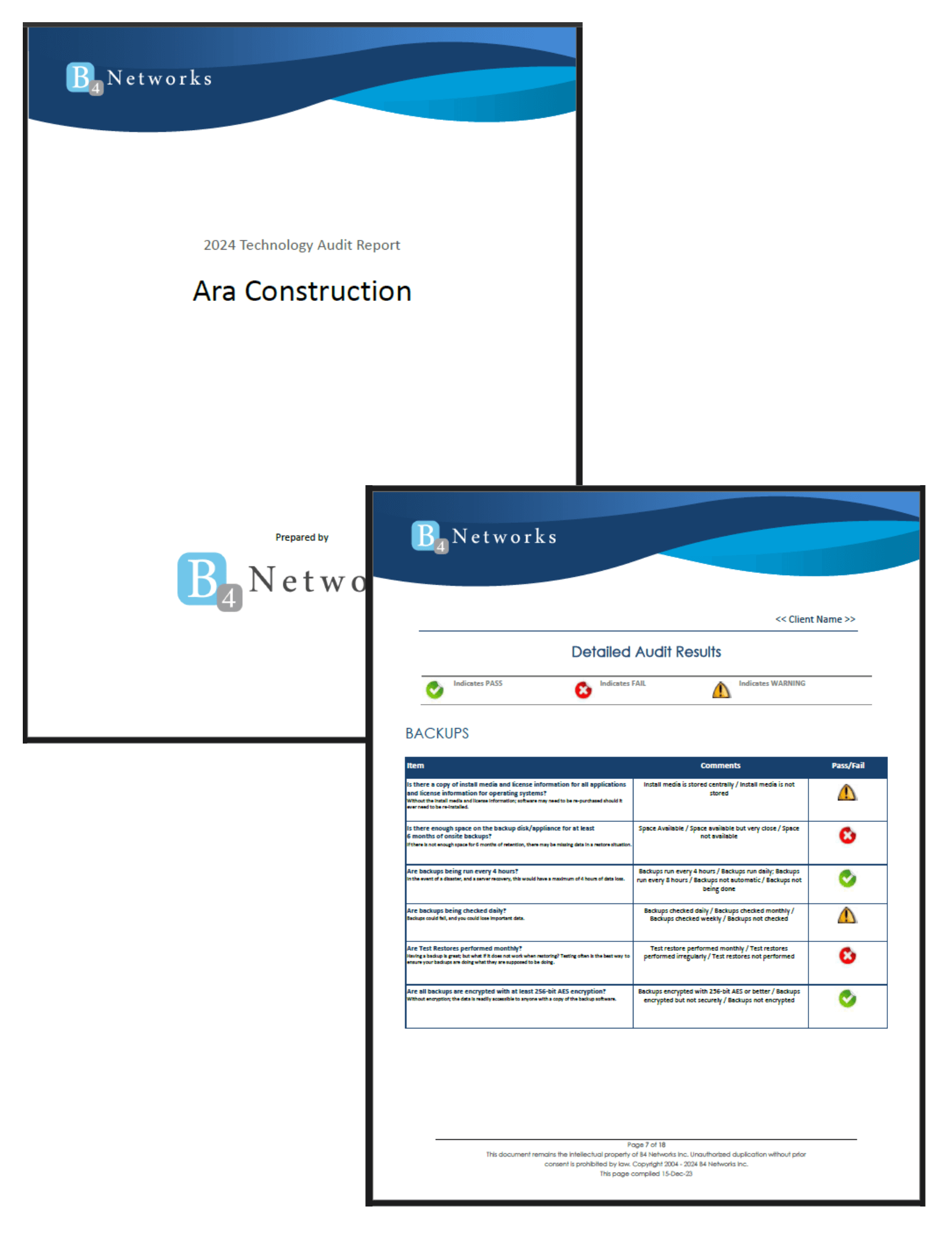
Having backups is only part of the equation. The real question is whether those backups have been tested. Do you know how long recovery will take? Have you restored files recently? Are all of your critical systems included? A backup only proves its value when it successfully restores your business. Until then, it's simply a copy of your data.
2. "Our Monitoring Will Tell Us If Something Goes Wrong"
Monitoring tools are important. They can detect unusual activity, hardware failures, and potential cybersecurity threats. But detection is not the same as response. A monitoring alert still requires someone to investigate the issue, determine its impact, and take the appropriate action. Technology can tell you something is wrong, but it cannot make business decisions for you.
3. "Our Team Will Know What To Do"
Every recovery plan looks straightforward until something unexpected happens. A critical server fails, an employee opens a phishing email, or power is lost. Suddenly everyone is asking the same questions. Who is leading the response? Which systems should be restored first? How do employees continue working? Businesses that recover quickly already know the answers because they have documented and practiced their recovery process.
4. "It Won't Happen To Us"
Most disruptions are not headline-making events. They are everyday business problems. A hardware failure, a phishing attack, a corrupted file, or a power outage. The businesses that recover the fastest are not the ones that avoided disruption. They are the ones that planned for it.
Recovery Planning Is About More Than Backups
Business continuity means understanding how your business keeps operating when technology fails.
That includes:
- Tested backups
- A documented recovery plan
- Clearly assigned responsibilities
- Recovery priorities for critical systems
- Regular reviews as your business grows
Whether you operate a long-term care home, an agriculture business, or a growing company anywhere across Southern Ontario, your recovery strategy should evolve as your business changes.
Be Ready Before You Need It
The best time to identify weaknesses is before an outage forces you to. At B4 Networks, we help businesses across Niagara, Hamilton, Simcoe County, and the GTHA test backup strategies, improve disaster recovery planning, and reduce business downtime.
Not sure whether your recovery plan will work when you need it? Let's find out. Book a discovery call or call 905-228-4809 (Niagara) or 705-885-0993 (Barrie). We'll help you review your backup strategy, identify recovery gaps, and make sure your business is prepared for the unexpected.